
As Above, So Below
The Idea Everyone Quotes — But Few Truly Understand

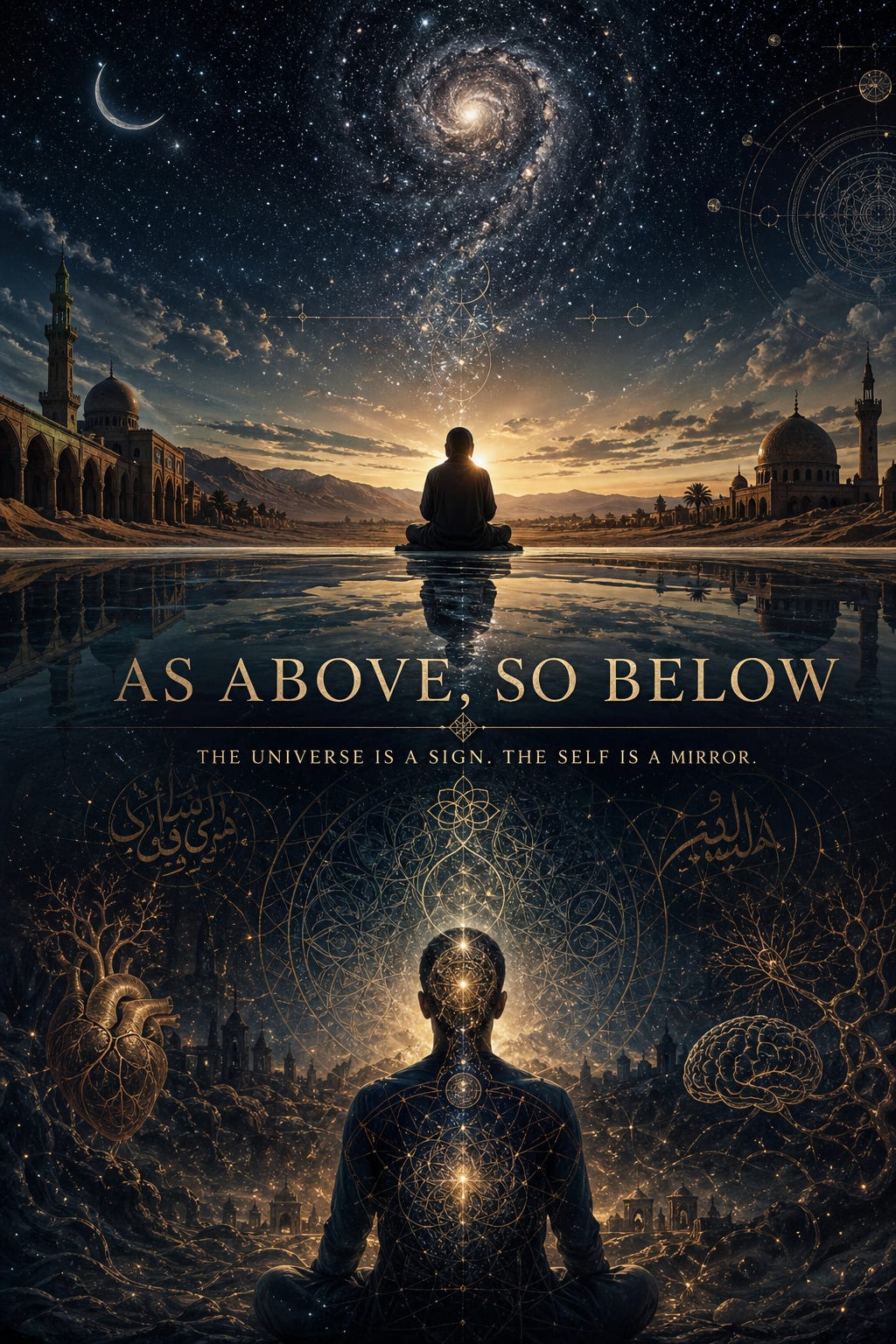
The phrase “As above, so below” is most famously linked to the Hermetic text Emerald Tablet, where it expresses a deep idea: that the structure of the universe is reflected at every level — from the vast cosmos down to the human being.
In Islam, you won’t find that exact wording. But the meaning — the relationship between the seen and unseen, the macrocosm and microcosm — is very much present, though framed differently and grounded in strict monotheism (tawḥīd).
Islam: Not a Mirror — Signs in Horizons & Within
Islam does not teach that creation mirrors God or shares His essence. That would contradict tawḥīd. Instead, it teaches that creation is full of āyāt (signs) pointing toward God.
The Qur’an says:
“We will show them Our signs in the horizons and within themselves…” (41:53)
This is the closest Islamic parallel to “as above, so below” — but notice the shift:
Not correspondence of power
Not shared divinity
But reflection as evidence
The heavens (above) and the self (below) are both indicators, not equivalents.
The Microcosm: Human as a Universe
Islamic scholars and mystics often described the human being as a microcosm (al-ʿālam al-ṣaghīr) reflecting the greater universe (al-ʿālam al-kabīr).
This idea is especially developed in Ibn Arabi’s metaphysics:
The cosmos = manifestation of Divine names
The human = the most complete reflection of those names
But crucially:
You reflect Divine attributes (mercy, knowledge, justice)
You do not possess them independently
So the “above” (cosmic order) and “below” (human inner world) align — but through dependence on God, not equivalence.
Sufism: Inner and Outer Worlds
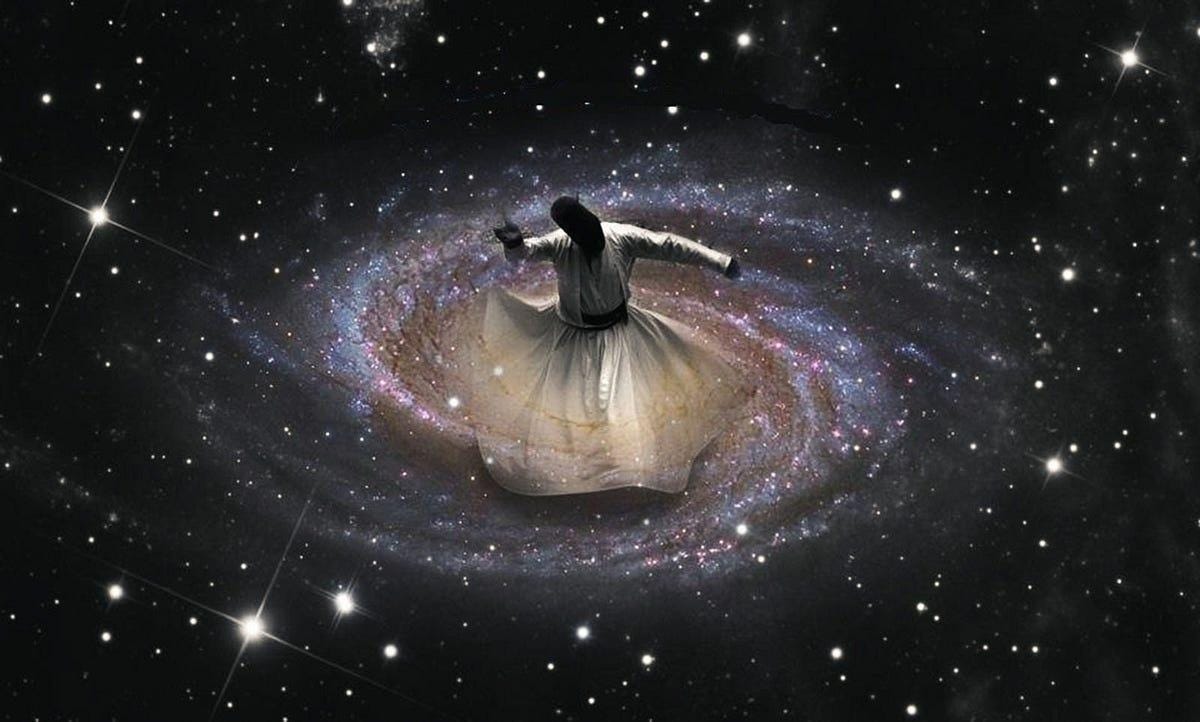
Within Sufism, the idea becomes experiential.
The outer world (the sky, nature, creation) corresponds to inner states:
Chaos outside ↔ unrest within
Harmony outside ↔ alignment within
The journey of the seeker is to:
Read the world as a symbolic text
Read the self as a deeper mirror
But again — the mirror reflects truth, not divinity of the self.
Science: Patterns Across Scales
From a scientific lens, the phrase becomes surprisingly relevant — though interpreted differently.
Fractals & Patterns
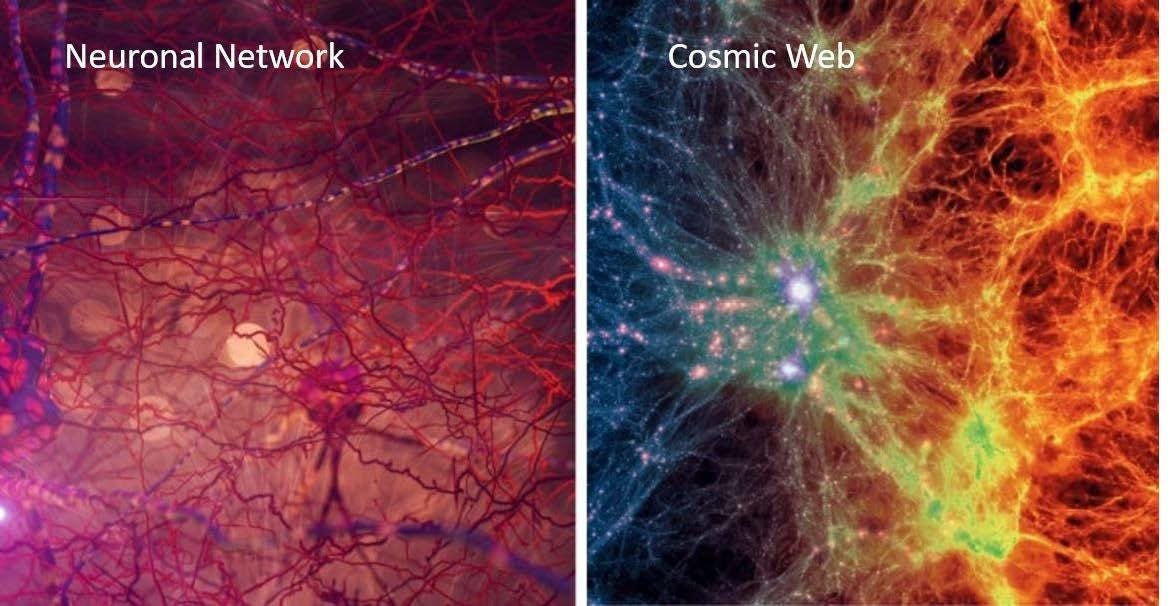
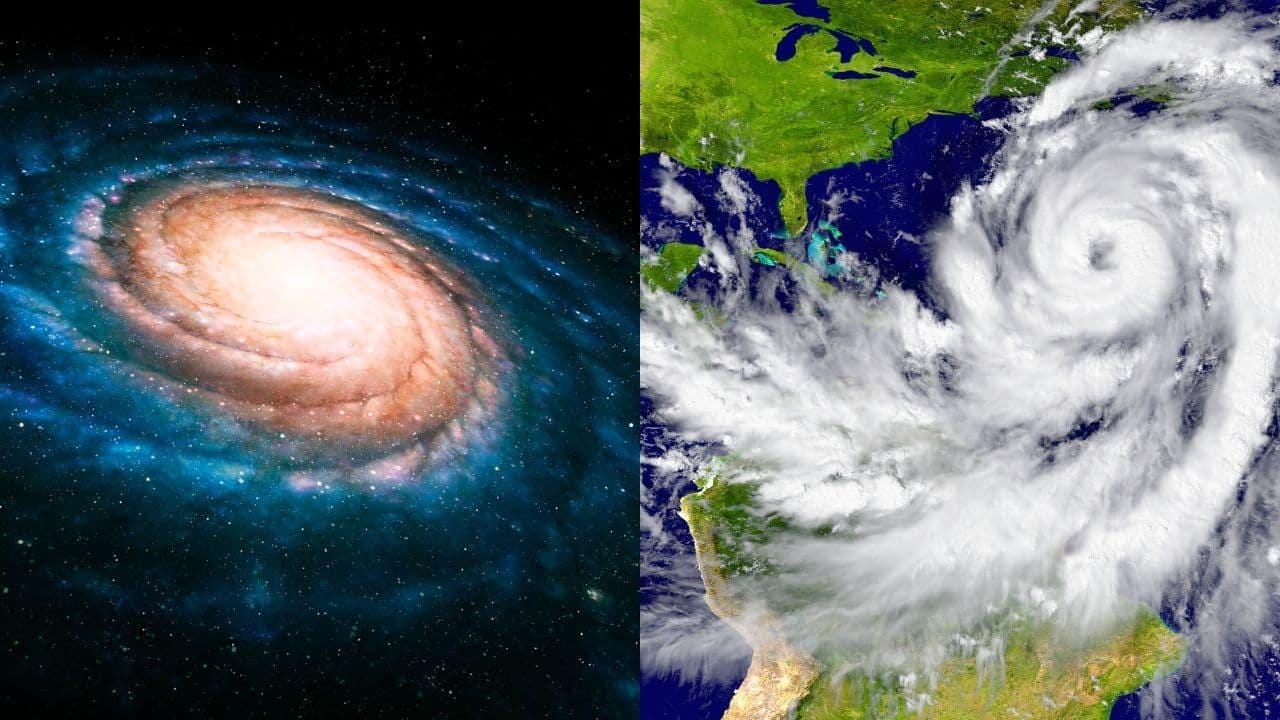
Modern science shows repeating patterns across scales:
Spiral galaxies resemble hurricanes
Neural networks resemble cosmic structures
Tree branches resemble blood vessels
This doesn’t prove mysticism — but it does show:
Nature reuses patterns across “above” and “below.”
Metaphysics: Unity Without Collapse
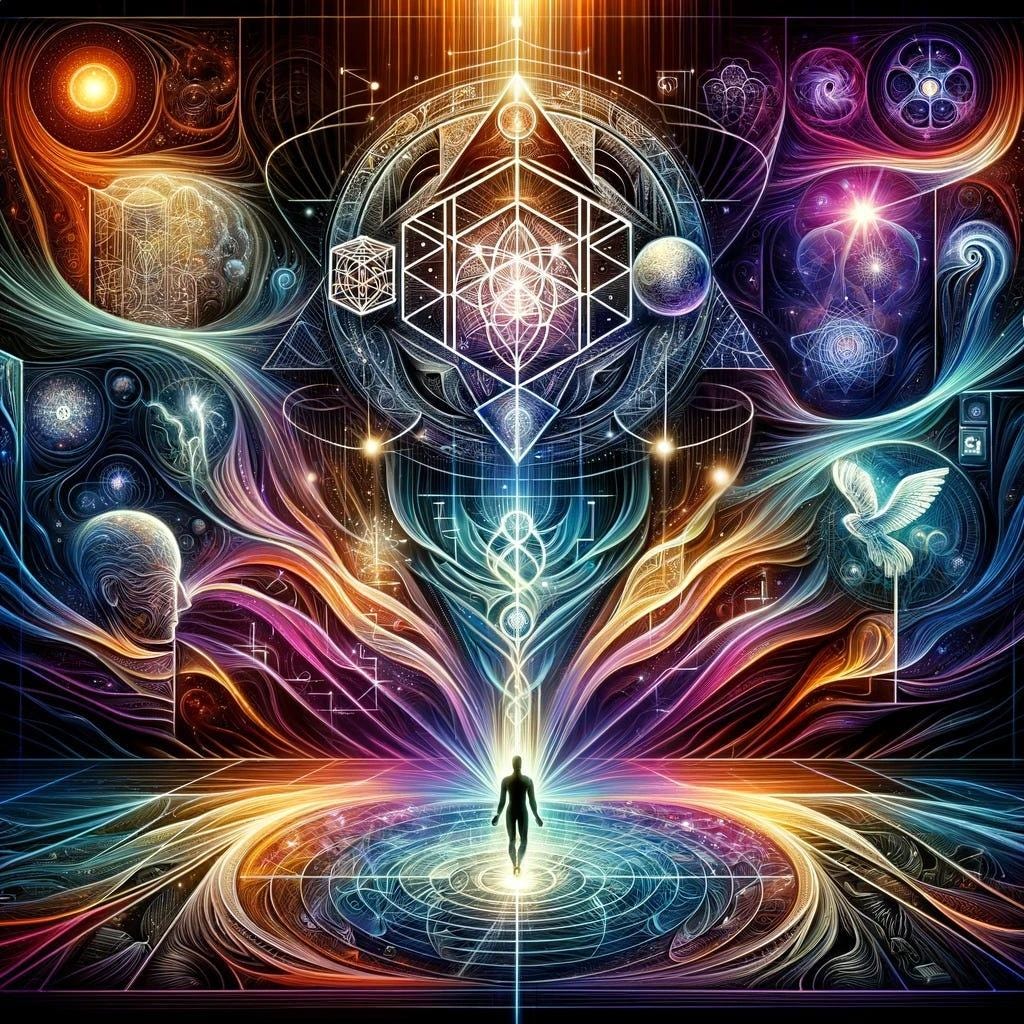
Metaphysically, the idea points to unity underlying multiplicity.
In Islamic thought:
There is one source (Allah)
Creation unfolds in layers (seen/unseen, physical/spiritual)
Each layer reflects order, meaning, and intentional design
But Islam draws a clear boundary:
Creator ≠ Creation
This is where it diverges sharply from some Hermetic or occult interpretations.
Why It’s Profound (Through an Islamic Lens)
What makes the idea powerful — even within Islam — is this:
The universe is not random
The self is not separate from meaning
There is coherence between inner and outer reality
But the conclusion is different:
Instead of
“as above, so below — therefore I am divine”
Islam leads to:
“as above and within — therefore there is One who designed both”
The Real Depth
The deepest alignment with this concept in Islam is not about control or correspondence.
It’s about recognition:
The sky teaches you vastness
The self teaches you depth
Both lead you to the same source
Not as mirrors of God —
but as signposts pointing back to Him.Witchcraft — where “as above, so below” is used, not just observed
Witchcraft & Esoteric Traditions
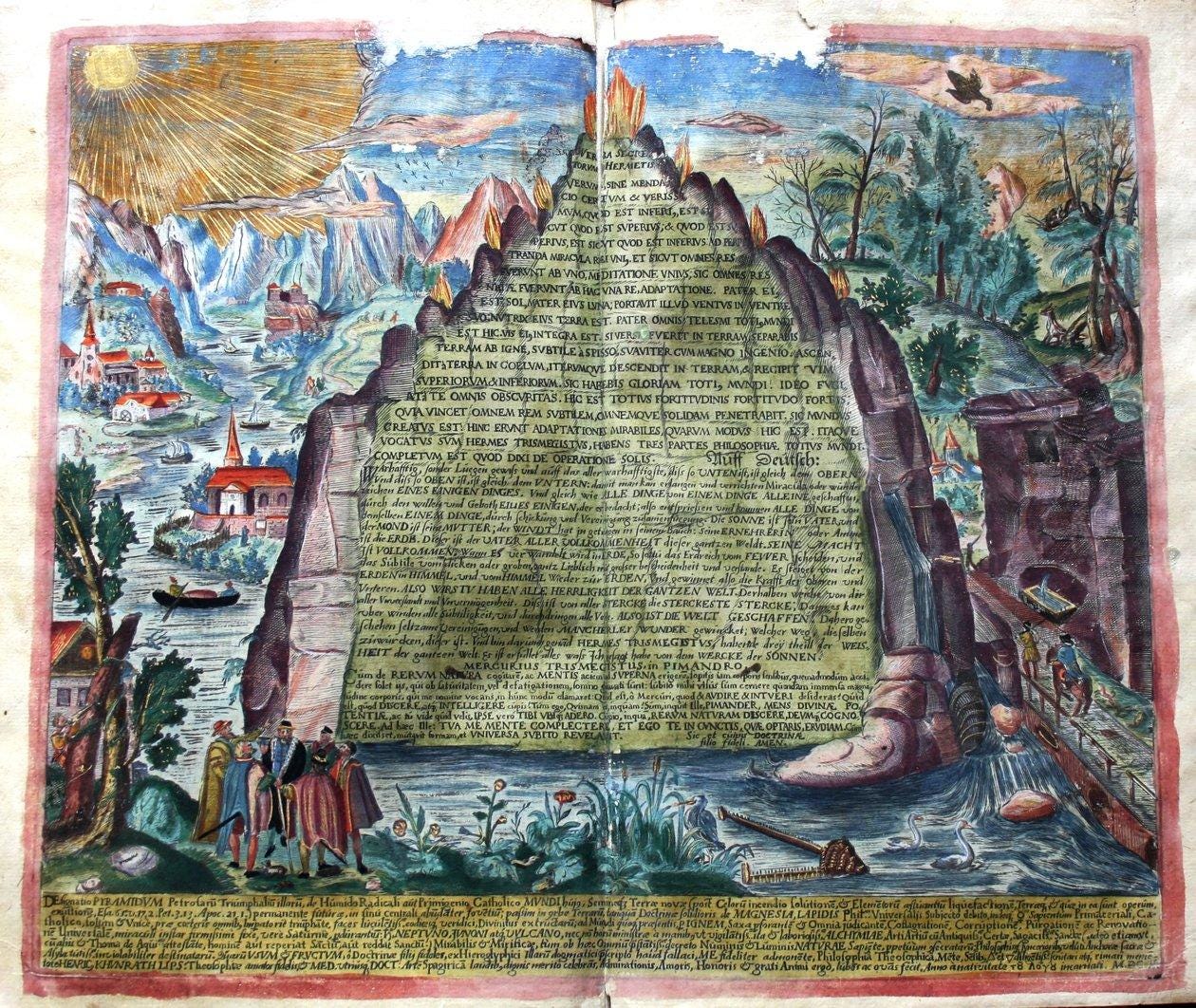
In Western esoteric traditions, “as above, so below” is often used in:
Ritual magic
Astrology
Correspondence systems (planets ↔ metals ↔ emotions)
These systems assume:
Direct energetic influence between realms
Ability to manipulate outcomes via symbolic alignment
Islam rejects this framework when it crosses into:
Claiming hidden powers independent of God
Attempting to control unseen forces
This is why practices tied to siḥr (sorcery) are explicitly prohibite
In witchcraft and Western esoteric traditions, “as above, so below” isn’t just a philosophical idea — it’s treated as a working principle.
The assumption is simple but powerful:
what exists in the cosmic realm (above) has a direct, active correspondence with the earthly and human realm (below) — and that connection can be used.
How it actually works (in that framework)
Practitioners build systems of correspondences:
Planets ↔ emotions ↔ days of the week
Elements (fire, water, air, earth) ↔ personality ↔ rituals
Herbs, crystals, colours ↔ specific outcomes
So instead of just observing patterns, the idea becomes:
Align with the “above” → influence the “below”
Or manipulate the “below” → affect the “above”
That’s the core leap from philosophy into practice.
Ritual logic
A ritual might involve:
Timing something with a planetary alignment (astrology)
Using symbols that represent cosmic forces
Recreating a “mini version” of the universe in a ritual space
Why?
Because the ritual space becomes a microcosm of the macrocosm.
Acting within it is believed to ripple outward.
Where it diverges from Islam
This is the critical line.
In Islam:
The universe reflects order → you observe and reflect
Power belongs to God alone → you don’t control unseen forces
In witchcraft (depending on the tradition):
The universe is interconnected in a usable way
Hidden forces can be accessed, influenced, or directed
That shift — from recognition → manipulation — is why it’s classified in Islam as:
siḥr (sorcery) or prohibited forms of practice
even when it appears symbolic or harmless
The deeper tension
Both frameworks notice the same thing:
Patterns repeat
Reality is layered
There’s connection between realms
But they draw completely different conclusions:
Esoteric traditions:
“There is a system — learn it, use it.”Islam:
“There is a system — reflect on it, submit to its Creator.”
Why it still feels powerful
Because the underlying insight is true at a surface level:
The world is interconnected
Symbols carry meaning
Intention affects perception and behaviour
That’s why it resonates.
But the interpretation — what you do with that insight — is where the paths split completely.
If everything you meet is an echo… what is your life trying to say back to you?